Homeowners facing a septic decision typically arrive at three paths: monitor a healthy system, execute targeted component repairs, or prepare for major drainfield replacement. Every choice hinges on how effectively wastewater moves from the home into the soil and whether the system maintains proper biological treatment.
Understanding the mechanics, from tank settling to drainfield filtration, allows you to accurately interpret symptoms like slow drains, surface odors, or lush grass bands before an inconvenience escalates into a catastrophic failure.
The Three-Stage Process: From Flush to Filtration
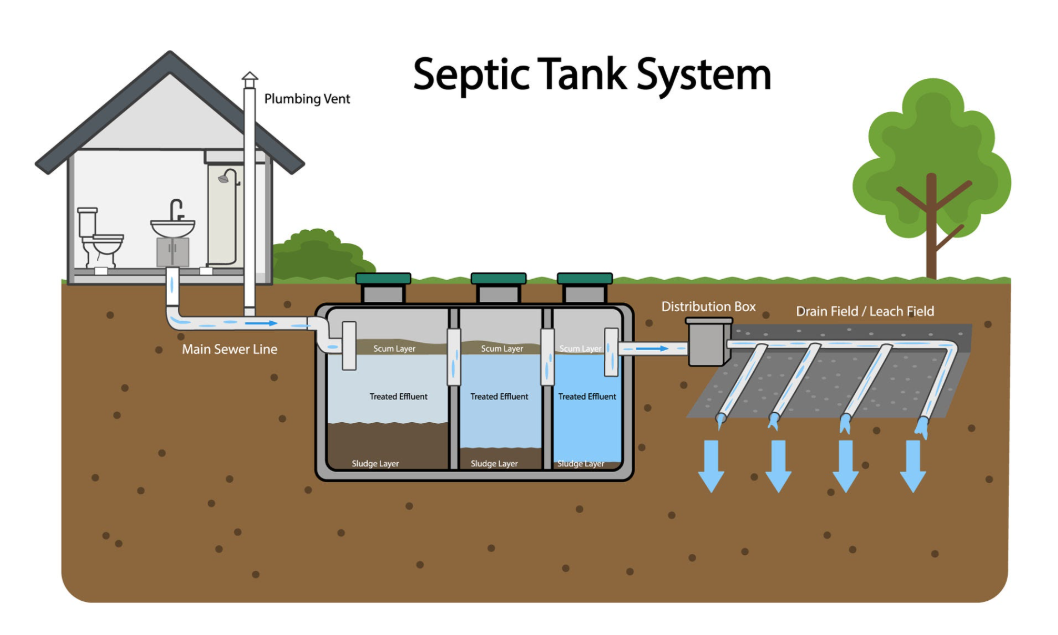
A conventional septic system is not a municipal treatment plant; it does not “purify” wastewater inside the tank. Instead, it relies on a coordinated three-stage biological and physical process.
1. The Septic Tank (Separation & Digestion)
When household wastewater enters the tank, velocity drops to allow physical separation:
- Scum Layer (Top): Fats, oils, grease (FOG), and lightweight solids float to the surface.
- Sludge Layer (Bottom): Heavy organic and inorganic solids settle to the floor, where anaerobic bacteria partially digest the organic mass.
- Effluent Layer (Middle): A relatively clear liquid zone between the scum and sludge.
Inlet and outlet tees (or baffles) keep the surface scum and bottom sludge trapped inside the tank. As new water enters, only the middle liquid layer (effluent) exits through the outlet baffle or effluent filter.
2. Conveyance & Distribution
Effluent travels from the tank to the absorption area through one of two methods:
- Gravity Systems: Rely on continuous pipe slope to carry effluent into a distribution box (D-box), which splits the liquid evenly among trench lines.
- Pressure Dosing Systems: Employ an effluent pump, float switches, and a control panel inside a dosing tank. The pump delivers measured batches of liquid under pressure, ensuring the entire drainfield receives uniform volume while allowing the soil to rest between doses.
3. The Drainfield (Soil Absorption & Biological Polishing)
The drainfield (leach field) performs over 80% of total wastewater treatment. Perforated pipes laid in gravel trenches, chambers, or engineered mounds disperse effluent into the unsaturated soil below.
Aerobic soil bacteria feed on remaining organic matter, viruses, and pathogens. The natural soil matrix filters out fine suspended particles. For this biological process to function, the soil pore spaces must alternate between wetting and resting periods so oxygen can diffuse into the ground.
Diagnostics: Normal Operation vs. Early Failure
High water alarm sounding continuouslyDosing pump failure, stuck float switch, or tripped breakerSilence the alarm, stop heavy water use, and verify breaker/pump switches.Bright green grass strips over lateral linesExcessive nutrient surfacing or shallow lateral line saturationCheck effluent filter for clogs; test distribution box for uneven line loading.Spongy, saturated soil or standing greywaterDrainfield failure, biomat compaction, or high groundwater tableCease non-essential water use immediately; schedule a certified site evaluation.
| Observable Symptom | Likely Point of Failure | Recommended Action |
|---|---|---|
| Single fixture drains slowly or gurgles | Internal branch line clog or local vent restriction | Snake the specific fixture line; check roof vent stack. |
| Multiple fixtures back up simultaneously | Main building sewer clog, inlet baffle blockage, or overfilled tank | Inspect the tank inlet and check liquid level relative to the inlet pipe. |
| Sewage odor near the tank or yard | Unsealed riser lids, broken cleanout pipe, or surfaced effluent | Check inspection port caps; verify whether liquid is pooling around the tank. |
4-Step Homeowner Troubleshooting Walkthrough
- Isolate Fixture Scope: If the kitchen sink drains slowly but toilets flush normally, the issue is inside the house walls. If running the washing machine causes the lowest shower drain to burble or back up, the obstruction sits downstream in the main line or septic tank.
- Inspect the Tank Liquid Level: Remove the tank access lid. A normal operating level sits just below the invert of the outlet pipe.
- If liquid sits below the outlet pipe, the tank may have a structural leak.
- If liquid sits above the outlet pipe, flow is restricted downstream at the effluent filter, conveyance pipe, or drainfield.
- Check the Effluent Filter: If equipped, an outlet baffle filter protects your drainfield by catching suspended solids. If it has not been serviced, pull the filter handle, rinse it with a hose back into the tank’s inlet side, and observe if the water level drops.
- Evaluate the Drainfield Surface: Walk the lateral lines. Look for signs of effluent breakouts, persistent mushy spots, or soil compaction caused by vehicle traffic or landscape grading changes.
Preventative Care: Maximizing System Lifespan
Pumping Intervals
Septic tanks require periodic pumping to remove accumulated sludge and scum before they fill more than one-third of the tank’s total working volume. When solids accumulate beyond this threshold, settling time drops, forcing suspended particles out into the drainfield where they permanently seal soil pores.
Standard Residential Pumping Frequency: Every 3 to 5 Years (Adjust downward for large households or undersized tanks)
Water Loading Management
Hydraulic overload is a leading cause of drainfield failure. Spreading water volume prevents rapid tank surges that push solids past baffles:
- Stagger Laundry Cycles: Wash one or two loads daily rather than running five to six loads consecutively on weekends.
- Eliminate Fixture Leaks: A single running toilet flapper can discharge 200+ gallons of unmetered water directly into the drainfield daily.
- Divert Surface Runoff: Direct roof downspouts, sump pump lines, and French drains entirely away from the absorption field.
Drain Chemistry & Solids Restriction
Native bacteria perform all septic digestion without chemical intervention. Avoid products that destroy tank microbiology:
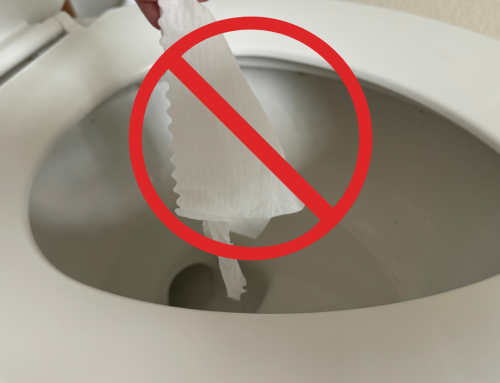
- Never Flush: Disinfecting wipes (“flushable” or otherwise), feminine hygiene products, paper towels, cat litter, or cigarette butts. For a comprehensive breakdown of everyday household items that clog drainfields and destroy bacterial balance, review our checklist of what not to flush into a septic tank.
- Kitchen Practices: Eliminate garbage disposal usage where possible; dispose of cooking grease and oils in the trash to avoid clogging soil pores.
- Chemical Additives: Skip over-the-counter enzyme packets, biological boosters, and chemical line openers. Stable residential systems naturally cultivate sufficient bacterial colonies.
Frequently Asked Questions
Can a septic system be pumped too frequently?
Pumping too often does not physically harm the equipment, but it generates unnecessary expense without improving drainfield absorption. Stick to an evidence-based schedule using measurements from annual or biennial inspections.
What should I do if my drainfield area floods after heavy rains?
Saturated soils temporarily lose their ability to accept and polish effluent due to high seasonal water tables. Reduce indoor water consumption to essential use only until groundwater recedes. Avoid driving equipment or mowing over wet drainfield lines to prevent soil compaction.
Why are biological additives discouraged?
Most commercial additives liquefy solids that should remain settled on the tank floor. When these suspended fats and micro-solids pass through the outlet into the leach field, they feed the biomat layer and permanently plug the soil pore network.
Implementation Checklist
- Locate and document physical cleanouts, tank lids, and drainfield distribution lines.
- Inspect and rinse the outlet tee effluent filter every 6 to 12 months.
- Verify that downspouts, driveways, and landscaping route surface drainage away from the leach bed.
- Check all interior toilet flappers and fixtures for silent continuous leaks.
- Schedule a professional inspection and pump-out every 3 to 5 years, retaining the technician’s sludge/scum measurement logs.